Thanksgiving RV travel means family, food, football, and the annual tradition of wondering why everyone in America decided to get on the highway at the exact same time.
If you’re planning Thanksgiving RV travel this year, you already have one big advantage: your home away from home comes along for the ride. No fighting over the guest bedroom. No squeezing everyone’s luggage into the trunk. And no worrying about where the dog will sleep when you arrive.
But taking a motorhome, fifth wheel, or travel trailer out during one of the busiest holiday periods of the year takes more planning than an ordinary weekend getaway. Between crowded highways, unpredictable November weather, and figuring out where to park a 35 foot RV at Grandma’s house, there are a few things worth handling before departure.
Here are nine smart Thanksgiving RV travel tips to make your holiday road trip easier, safer, and a whole lot more enjoyable.

Source: AAA 2026 Thanksgiving Travel Forecast, with traffic timing from INRIX.
9 Smart Thanksgiving RV Travel Tips
Each tip below tackles a real pain point of holiday RV trips, from traffic and tires to parking, weather, and the pumpkin pie.
Don’t Wait Until Wednesday Afternoon to Leave
If you thought Thanksgiving traffic was going to be lighter this year, we’ve got some news. According to AAA’s official 2026 Thanksgiving Travel Forecast, 81.5 million Americans are expected to travel at least 50 miles from home between November 24 and November 30.
And here’s the part RV travelers really need to know: about 72.9 million people are expected to travel by car. That’s nearly 90% of holiday travelers sharing the roads.
Texas roads will feel it too. AAA ranks Dallas/Fort Worth among its top 10 domestic Thanksgiving destinations this year, and it flags Houston to Austin on Sunday, November 29 around 1 p.m. as a peak jam, with the drive expected to take about 62% longer than usual. That’s a whole lot of traffic, especially when you’re driving a motorhome or towing a travel trailer or fifth wheel.
When Should You Hit the Road?
AAA and transportation analytics company INRIX have identified the busiest Thanksgiving RV travel windows for 2026. If you’re heading out before the holiday, consider these departure times:
- Tuesday, November 24: Leave before 1 p.m. to avoid the worst congestion, expected between 2 p.m. and 8 p.m.
- Wednesday, November 25: Hit the road before noon. Traffic is expected to be heaviest between noon and 7 p.m.
- Thursday, November 26: Thanksgiving Day itself is expected to have relatively light traffic.
Planning your return trip? Sunday, November 29 is expected to be especially busy between noon and 8 p.m., so leaving before 11 a.m. could help you dodge some of the congestion. Monday, November 30 is another busy return day, with the heaviest traffic predicted between 2 p.m. and 7 p.m.
| Day | Best Departure Time | Worst Traffic Window |
|---|---|---|
| Tue, Nov. 24 | Before 1 p.m. | 2 p.m. to 8 p.m. |
| Wed, Nov. 25 | Before noon | Noon to 7 p.m. |
| Thu, Nov. 26 (Thanksgiving) | Minimal traffic expected | No major window identified |
| Fri, Nov. 27 | Before noon | 1 p.m. to 7 p.m. |
| Sat, Nov. 28 | Before 11 a.m. | Noon to 9 p.m. |
| Sun, Nov. 29 | Before 11 a.m. | Noon to 8 p.m. |
| Mon, Nov. 30 | Before 1 p.m. | 2 p.m. to 7 p.m. |
Why This Matters for RV Travelers
Driving a motorhome or towing a large RV takes more planning than hopping into a passenger car. You need more stopping distance, more room for turns, and extra time to handle crowded highways safely.
Before leaving, check current traffic conditions, identify RV friendly routes, and give yourself plenty of time to reach your destination. And if your schedule allows, travel outside the busiest afternoon hours.
After all, arriving safely for Thanksgiving dinner beats spending the holiday staring at brake lights on the interstate. The turkey can wait. Your safety can’t.
Give Your RV a Thanksgiving Travel Checkup
Nobody wants Thanksgiving RV travel to end with a wait for roadside assistance. Before leaving, give your RV and tow vehicle a thorough inspection.
Start with the tires. Check inflation pressure while they’re cold, inspect the tread, and look for cracks or visible damage. Don’t forget the spare. The National Highway Traffic Safety Administration recommends checking tire pressure before long trips and inspecting tires for signs of wear.
For travel trailers and fifth wheels, inspect the hitch connection, safety equipment, trailer brakes, and exterior lighting. Motorhome owners should check engine fluids, batteries, wipers, and other chassis components according to the manufacturer’s recommendations.
- Tires and spare tire
- Brake lights and turn signals
- Hitch connections and safety chains, when applicable
- Trailer breakaway system, when equipped
- Batteries and charging system
- Propane system and leak detectors
- Interior cabinets, doors, and loose belongings
- Freshwater and holding tank levels
If your tank gauges have ever told you something that wasn’t quite true, read up on why RV tank sensors give false readings before you hit the road. Also make sure your loaded RV stays within its weight ratings; if towing weight is a concern, our guide to lightweight RVs built for easy towing is a good place to start.
A quick inspection before departure can keep a small issue from becoming a major holiday headache.
Plan Thanksgiving RV Travel Fuel Stops Before You’re Running on Empty
Here’s something every RV traveler learns eventually: not every gas station is designed for a large motorhome or a truck pulling a fifth wheel. That convenient little station on the corner might have cheap fuel, but getting back out of its parking lot can turn into an unwanted driving challenge.
Before your Thanksgiving RV travel day, identify fuel stations along your route that can handle your RV’s size. Truck stops, travel centers, and larger highway stations often offer easier access, but always check the layout. Think about your turning radius, total length, and where the pumps sit.
Fuel costs are another reason to plan ahead this year. AAA reports record high pump prices this fall, with August, September, and October each setting new monthly records, so budgeting for fuel matters even more when you’re driving a motorhome or towing a larger RV long distances.
Fuel economy also changes with towing weight, speed, wind, terrain, and traffic. Plan stops around your rig’s actual range rather than assuming you’ll get the same mileage as an unloaded truck. Curious how engine type plays into range? See what we learned in our gas vs. diesel RV road test.
Know Where You’re Sleeping Before You Get There
One of the best parts of traveling in an RV is having your own bed waiting at the end of the day. That doesn’t mean you can park anywhere overnight.
During Thanksgiving week, holiday demand means popular campgrounds and RV parks can fill up, especially near major destinations. Reserve your campsite ahead of time whenever possible.
If you’re considering an overnight stop at a travel center or retail location, verify that it’s permitted before you arrive. Walmart’s overnight RV parking permissions, for example, have historically depended on individual store management, local regulations, and available space. Never assume a big parking lot automatically means overnight stays are allowed.
Before choosing an overnight stop, check:
- Whether overnight RV parking is permitted
- Maximum vehicle length or site restrictions
- Arrival and check in times
- Available hookups
- Local parking regulations
- Access for larger RVs
Stopping without hookups? Plan ahead for your electrical, water, and heating needs. A little research beats discovering at 10 p.m. that your planned stop doesn’t allow RVs.

Make Sure Your RV Actually Fits at Grandma’s House
For a lot of families, Thanksgiving RV travel ends in a relative’s driveway. This one sounds obvious until you’re trying to back a 40 foot fifth wheel into a residential driveway.
Before arriving at a relative’s home, ask about parking. Is the driveway long enough? Does the street allow RV parking? Are there low branches, overhead utility lines, steep slopes, or tight spots where you’ll need room to turn around?
Local ordinances and HOA rules may limit how long an RV can stay parked at a residence. If the plan is to sleep in the RV overnight, check whether local rules allow RV occupancy on residential property.
And don’t assume you can plug your RV into any household outlet. RV electrical connections require compatible equipment and properly rated circuits, and a standard residential receptacle may not support all your RV’s appliances.
Prepare Your Thanksgiving RV Travel Plan for Weather That Can’t Make Up Its Mind
November weather has a habit of changing the plan. You might leave Texas in a T shirt and arrive somewhere that calls for a winter coat. For RV travelers heading north or into higher elevations, freezing temperatures bring extra challenges.
Check the forecast along your entire route, not just at your destination. The National Weather Service recommends preparing for winter driving conditions and carrying emergency supplies when cold weather is possible.
For RV owners, that also means protecting vulnerable plumbing. If freezing temperatures are expected, review your manufacturer’s cold weather instructions. Depending on your RV’s design, you may need to protect exposed water lines, hoses, and holding tank components.
Pack extra blankets, warm clothing, flashlights, drinking water, and nonperishable food.
Pack Thanksgiving Essentials Where You Can Reach Them
Picture this. You’ve arrived at the family gathering. Everyone is ready to eat. And the homemade pumpkin pie is buried under three suitcases, a folding table, and the dog’s travel crate. Not ideal.
Before loading up for Thanksgiving RV travel, separate holiday essentials from your regular travel supplies so you can grab what you need without unpacking the whole rig.
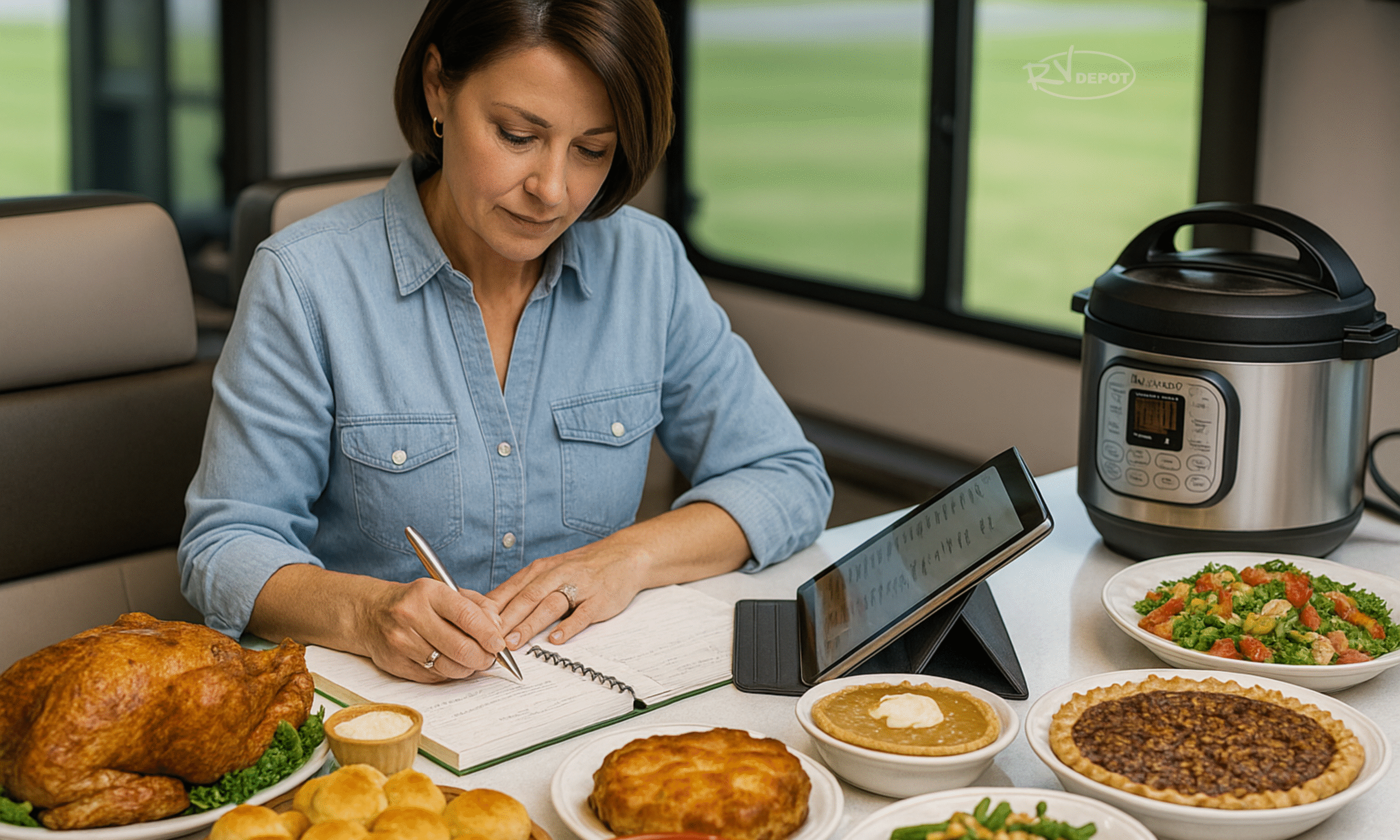
Build a Thanksgiving Travel Kit
- Serving utensils and food containers
- Any dish you’re bringing to dinner
- Medications and chargers
- An extra change of clothes
- Foil, zip bags, and a small cooler for leftovers
If you’re transporting prepared food, follow proper food storage and temperature guidelines. Then secure everything before driving. Loose cookware, decorations, and heavy items can shift while the RV is moving, so use designated storage compartments and follow your RV’s cargo loading instructions.
The goal is to arrive with the stuffing intact and the dishes still in one piece.
Give Yourself More Time Than Your GPS Suggests
Your navigation app says the drive takes four hours. But does that include fuel stops, traffic delays, rest breaks, or the extra time needed to maneuver a large RV? Probably not.
When you’re driving a motorhome or towing a trailer, allow more time than you would for a car trip. Use RV compatible route planning when possible, especially if your rig has height, length, or weight restrictions. Regular passenger car navigation may not account for low clearances, restricted roads, or routes unsuited to larger RVs, so double check key route details with reliable road and transportation resources.
And take breaks. Long Thanksgiving RV travel days are tiring, especially on unfamiliar roads in holiday congestion.

Remember Why You’re Traveling in the First Place
Between packing lists, campground reservations, and traffic reports, it’s easy to forget what Thanksgiving is actually about: spending time with the people you care about.
One of the biggest benefits of Thanksgiving RV travel is the flexibility to visit family while bringing many comforts of home along. Enjoy dinner with everyone, then head back to your own familiar space at the end of the evening. For families with kids or pets, that extra room and familiar routine can make holiday visits much more comfortable.

You might even stretch your Thanksgiving RV travel into a longer trip. Visit relatives, explore a nearby town, or spend a few extra days at a campground before heading home. Need ideas closer to home? Browse these Texas RV park experiences, or use our tips for last minute RV getaways if the plan comes together late.
Just keep the schedule flexible. Sometimes the best holiday memories happen when you aren’t rushing from one place to the next. And if you spend an extra evening playing cards with family instead of sitting in traffic? That’s a pretty good Thanksgiving bonus.
Make Thanksgiving RV Travel Part of Your Holiday Tradition
Thanksgiving RV travel doesn’t have to mean stressful highways, complicated parking, or last minute surprises. With a little preparation, you can enjoy the freedom of the open road while keeping the comforts of your own space close by.

Plan your route, inspect your RV, confirm your parking, and prepare for changing weather. Most importantly, leave enough room in your schedule to enjoy the people you’re traveling to see. Because Thanksgiving isn’t about how quickly you reach your destination. It’s about the memories you make when you get there.
Thanksgiving RV Travel FAQ
What is the best day to leave for Thanksgiving RV travel?
Based on AAA and INRIX projections for 2026, leave before 1 p.m. on Tuesday, November 24 or before noon on Wednesday, November 25. Afternoons on both days are expected to be the most congested outbound windows, while Thanksgiving Day itself should see minimal traffic.
Can I park my RV at a relative’s house over Thanksgiving?
Often, yes, but check first. Confirm the driveway length, overhead clearance, and turnaround room, and look up local ordinances and HOA rules, which may limit how long an RV can stay parked or whether anyone can sleep in it.
Can I plug my RV into a regular household outlet?
Not reliably, and it is one of the most common Thanksgiving RV travel surprises. RVs need compatible equipment and properly rated circuits, and a standard residential outlet may not power all your appliances. Check your RV’s electrical requirements before you arrive, or book a nearby RV park with proper hookups.
Can I stay overnight at a Walmart or truck stop during Thanksgiving week?
Sometimes. Overnight permission varies by location, store management, and local rules. Call ahead or check with the location directly, and never assume a large lot allows overnight RV parking.
How do I keep my RV plumbing from freezing on a November trip?
Follow your manufacturer’s cold weather instructions, which may include protecting exposed water lines, hoses, and holding tank components. Don’t count on the furnace alone to protect every exposed pipe or connection.
How early should I book an RV park for Thanksgiving?
As early as you can. Thanksgiving RV travel is peak season for many parks, and popular campgrounds and RV parks near major destinations can fill up during Thanksgiving week, so reserving ahead gives you the best choice of sites and hookups.
Looking for an RV That Fits Your Holiday Travel Plans?
Whether you’re planning family road trips in a spacious Class A motorhome, exploring bunkhouse travel trailers for the whole crew, or considering a fifth wheel with residential style comfort, RV Depot Supercenter can help you explore your options.
With a large selection of RVs and multiple floorplans in Cleburne, Texas, our team can help you compare RVs that fit your travel plans and towing needs.
Schedule a WalkthroughMake more room for the memories that matter.
RV Depot Supercenter
4319 N Main St
Cleburne, TX 76033
(817) 221-0660
RvDepot.us
Get Directions
Sales: Monday to Friday 9am to 7pm, Saturday 9am to 5pm
Service: Monday to Friday 9am to 6pm, Saturday 9am to 5pm
Both closed Sunday
Trade In or Trade Up
Ready for more room at the holiday table? Bring your current RV and let our team put a value on it toward your next one.
- Motorhomes, fifth wheels, travel trailers and more
- Trade in, sell outright, or consign
- No trade or purchase required for an evaluation